
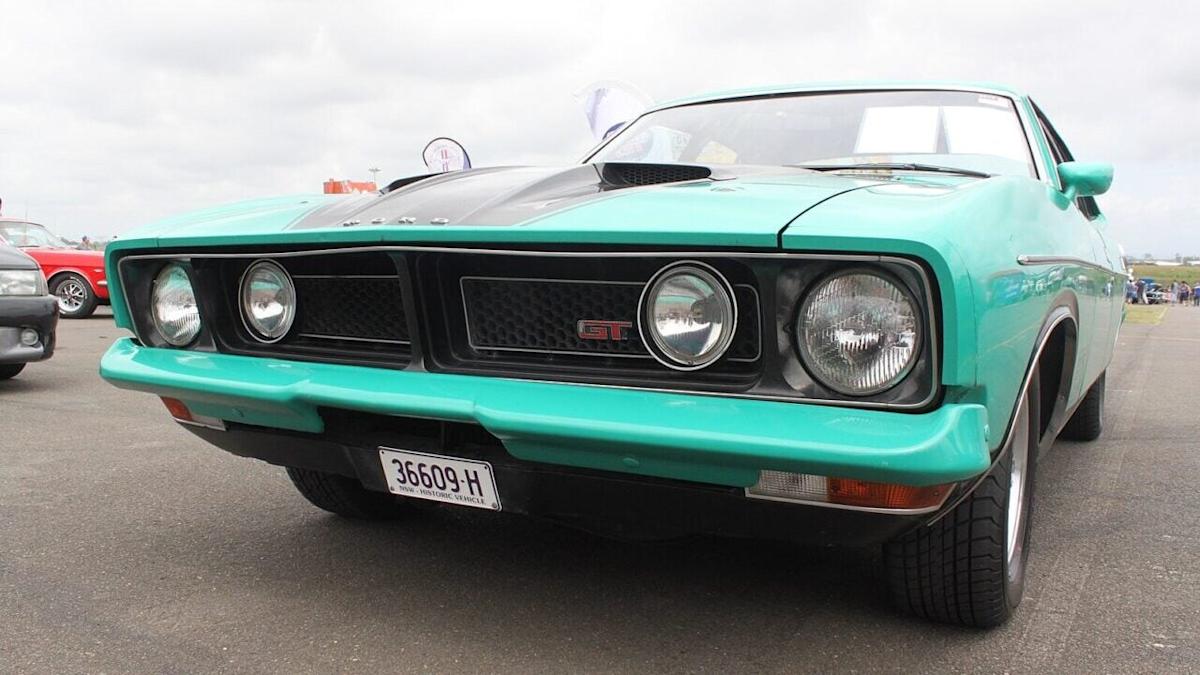
Ford’s Legendary Falcon Factory May Return — As An AI Data Hub

For decades, the Ford Australia Broadmeadows factory stood as one of the most important automotive plants in Australia. It was the birthplace of generations of locally built Falcons and helped define the country’s car industry for nearly 60 years.
Now, the historic site could be heading toward a completely different future. Instead of assembling sedans and SUVs, the former factory may soon house rows of servers powering artificial intelligence and cloud computing infrastructure.
Singapore-based Zerra DC has reportedly submitted plans to the Victorian government proposing a massive six-building data center campus on the old Broadmeadows site. If approved, the redevelopment would transform one of Australia’s most iconic automotive landmarks into a major technology hub.
We’re now witnessing a growing global trend where former industrial manufacturing sites are being repurposed for data centers, particularly as demand for AI computing power and cloud infrastructure accelerates worldwide.
A Historic Site For Australian Car Manufacturing

Ford first opened the Broadmeadows plant in Victoria in 1959, with the first locally produced Ford Falcon arriving shortly afterward in 1960. Over the following decades, the facility became central to Australia’s automotive industry.
At its peak, the plant employed more than 5,000 workers and produced over 600 vehicles per day. Broadmeadows built every generation of the Falcon through to the final FG X model, along with iconic Australian vehicles such as the Fairlane, LTD, and the Falcon-based Territory SUV.
The factory remained one of the Southern Hemisphere’s most productive automotive plants until Ford officially ended local manufacturing operations. On October 7, 2016, the final vehicle, a Kinetic Blue FG X Falcon XR6 sedan, rolled off the production line, marking the end of an era for Australian manufacturing. Ford later relocated its Australian headquarters to Richmond before selling the Broadmeadows site to the Pelligra Group in 2019.
Why Old Car Factories Are Becoming Data Centers
The idea of converting old automotive plants into data centers may sound unusual at first, though the logic behind it is surprisingly straightforward.
Large industrial facilities already possess many of the critical ingredients modern data centers require. Former factories typically have access to substantial electrical infrastructure, high-voltage transmission connections, expansive land footprints, and secure industrial zoning. Those characteristics make redevelopment faster and often more cost-effective than starting entirely from scratch.
