SIA flying into turbulence from fuel costs, Air India losses, but dividends offer upside
Citi maintains a ‘sell’, while DBS Group Research and CGS International maintain ‘hold’
[SINGAPORE] Analysts are cautious about Singapore Airlines ( SIA ) after the flag carrier’s earnings for the six months ended Mar 31 more than halved year on year.
While the carrier attributed the fall to the absence of a gain from the disposal of Vistara airline a year ago, some analysts are concerned its core earnings are flattening.
SIA’s H2 operating profit of S$1.6 billion almost doubled from the first half, but CGSI analyst Raymond Yap noted that year on year, it’s almost flat due to a wider share of losses from Air India.
The group reported a full-year associate loss of S$829 million, which Citi said was “in line with” the 25 per cent prorated Air India loss of about S$890 million.
Another major concern is the high fuel costs and flight disruptions faced by airlines all over the world after the Middle East war broke out in late February.
Given a “month of lag” in jet fuel supply contracts, analysts say the results ended Mar 31 likely did not include higher fuel costs sparked by the war in Iran.
Navigate Asia in
a new global order
Get the insights delivered to your inbox.
DBS Group Research analyst Jason Sum warned that the 2027 financial year will “prove far more challenging” for SIA even though jet fuel prices have “stabilised” at about US$150 to US$160 per barrel. The current prices, while not more than double pre-Iran war, are still about 70 per cent higher.
Sum said fuel costs would eat into margins, with SIA’s management acknowledging that while both its full-service carrier and Scoot have raised ticket prices, “the adjustments do not fully offset the rise in the price of jet fuel”.
As for Air India, the analyst said its “losses are expected to remain elevated near term.” SIA chief Goh Choon Pong said as much in an earnings brief on Friday. Turning the South Asian carrier around is “definitely not going to be a walk in the park”.
SEE ALSO

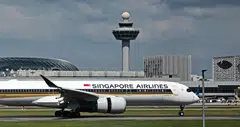
DBS Group Research and CGS International (CGSI) on Friday kept their “hold” recommendations, with target prices of S$6.50 and S$6.44, respectively.
Citi analysts in a Thursday (May 14) note maintained a “sell” on the counter with a target price of S$6.28, expecting further downside to the 2026 and 2027 forecast earnings consensus.
On the plus side
On a positive note, SIA could remain a dividend play.
CGSI noted that SIA dividends were a bright spot. Despite the associate losses, SIA declared dividends higher than expected, comprising a final regular dividend of S$0.22 and a special final dividend of S$0.07. Combined with interim payouts, the total dividend for FY26 was S$0.37, representing a 99 per cent payout ratio.
CGSI forecasts a 33 per cent year-on-year drop in core earnings per share for FY27, but said attractive dividend yields support its “hold” call.
Investors agree. Following the results and dividend news, SIA shares were up 14 cents to S$6.41 by Friday afternoon.
Aviation juggernaut
SIA’s operational engines are still firing. The group posted a record revenue of S$10.8 billion for the second half, up 8 per cent year-on-year.
On its H2 operating profit of S$1.6 billion almost doubling from the first half and up 72 per cent year-on-year, CGSI point to a strong rise in passenger yields on the back of robust demand and high load factors.
Citi said it viewed the airline to be among those in Asia-Pacific with the “highest probability to recoup additional fuel costs” thanks to it cornering 50 per cent of the market between Australia and Europe.
“We expect yield performance to remain robust, with yields at full-service carrier SIA to rise by double digits” for 2027, said DBS’ Sum, with mid-single-digit yield growth expected at Scoot. The increase is set to be supported by “premium cabin demand, constrained industry-wide aircraft supply and delayed fleet deliveries globally”.
SIA shares fell 0.2 per cent to close S$0.01 lower at S$6.27 on Thursday, before the results were announced.
Decoding Asia newsletter: your guide to navigating Asia in a new global order. Sign up here to get Decoding Asia newsletter. Delivered to your inbox. Free.