Which Past Fascist Does Trump Most Resemble? The Incompetent One.
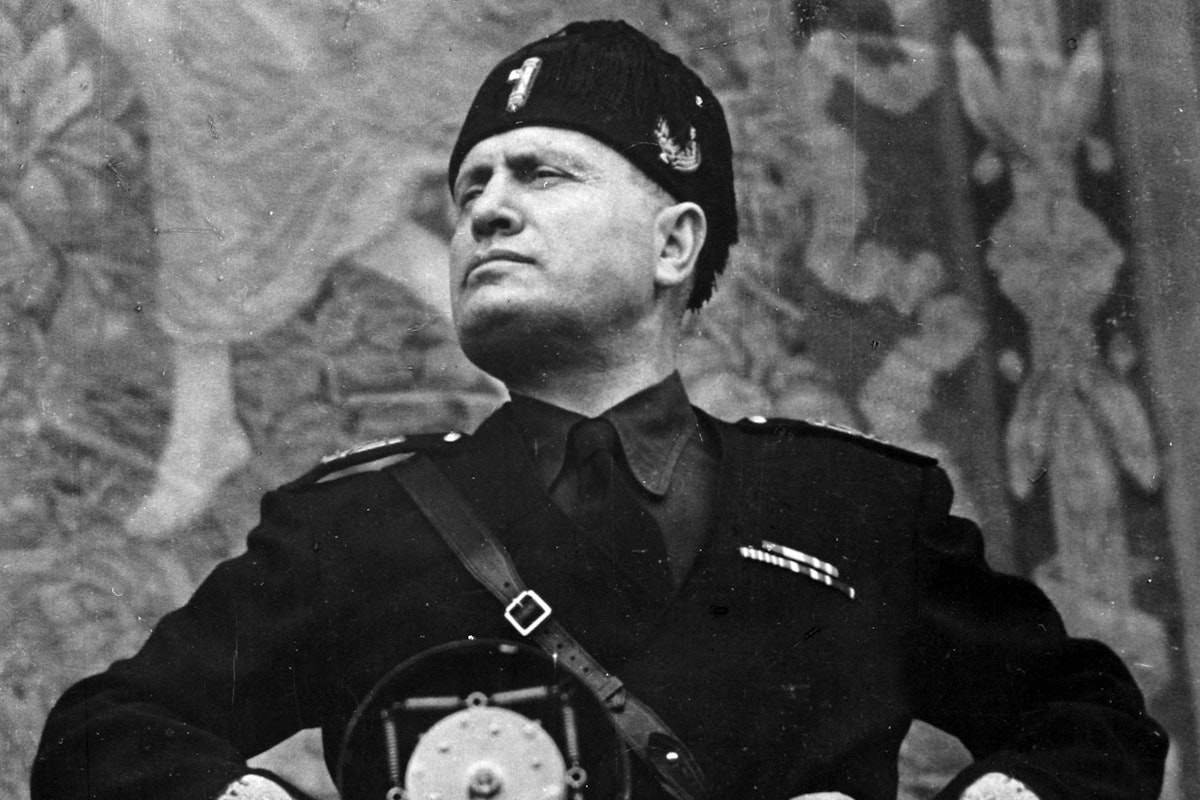
All this served him well
at first. But when he began to move outside of Italy—creating an Italian empire and forcing Italy into World War II—his fundamental provincialism,
his deep ignorance of the outside world, and his overestimation of his own
instincts over objective facts did him in. After years in power, surrounded by
toadies and yes-men, Mussolini began to believe his own rhetoric about Italy’s
“eight million bayonets,” preferring to ignore his generals’ warnings that
Italy was nowhere near ready to fight a world war. Mussolini was convinced that
“national character” mattered more than industrial capacity, causing him to
badly underestimate both Britain’s and America’s ability to wage war. Like
Trump, Mussolini insisted on taking personal charge of most important
negotiations. He insisted on meeting alone with Hitler, relying on his own
somewhat shaky German to deal with the Nazi leader, who, not surprisingly,
dominated their talks. This is reminiscent of Trump’s personalistic approach to
handling Vladimir Putin, in highly secretive, one-on-one meetings that the
Russian seems to always get the better of.
Like Trump, Mussolini
was an ardent protectionist, adopting a policy of “autarky,” demanding that
Italy should consume only products made in Italy. The policy was initially a peevish response
to the boycott that other nations leveled at Italy following its unprovoked
invasion of Ethiopia. But Mussolini elevated the practice to a central feature
of Italian economic policy, even though it did little to improve the standard of
living for Italians.
Piqued by Hitler’s
military successes, Mussolini impetuously invaded neutral Greece, only to be
beaten back by Greek troops and bailed out by a German invasion. Overcoming
German reluctance, Mussolini insisted on sending some 200,000 Italian troops to
participate in the Nazi invasion of the Soviet Union—because he wanted credit
for the defeat of Bolshevism. Never mind that the Italian Army had its hands
full in the Balkans and North Africa. The Italian troops were not properly
equipped for the Russian winter, and when the invasion failed, Italy lost
almost 60 percent of its expeditionary force. Many troops were forced to
literally walk back from Russia as much of their motorized transport broke down
or was destroyed. When Mussolini’s government fell in 1943, many of these men
were captured by their Nazi allies and sent to German concentration camps.